






















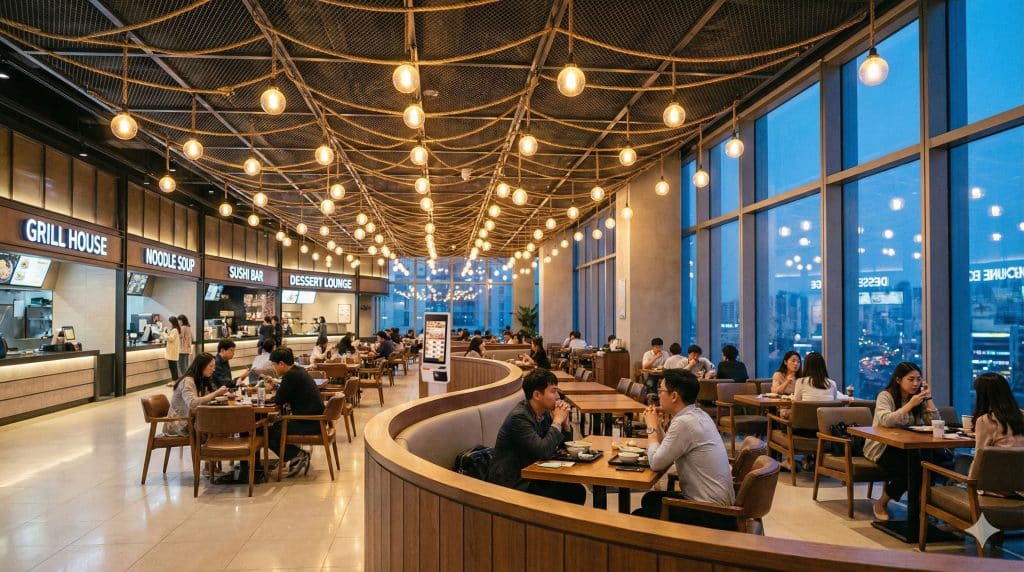
Across Hong Kong, Singapore and the wider APAC region, self-ordering kiosks have moved from “nice to have” to a core part of the modern F&B tech stack for QSRs, food courts and university canteens. Long queues, higher labour costs and changing guest expectations are pushing operators to rethink how ordering works in high-traffic environments. For QSRs, food courts and campus dining especially, kiosks are no longer an experiment – they are becoming the default ordering experience.
Table of Contents
- Why self-ordering kiosks are taking off in APAC
- What modern APAC operators expect from kiosk systems
- High-impact use cases across APAC venues
- ◦ QSR and fast casual
- ◦ Shopping mall food courts
- ◦ University canteens
- ◦ Hotels and resorts
- ◦ Casinos and entertainment venues
- ◦ Airports and transit hubs
- ◦ Clubhouses and member venues
- Why QSRs, food courts and campuses are ahead
- How Aigens supports AI-powered self-ordering
- Where to start with self-ordering kiosks in 2026
Why self-ordering kiosks are taking off in APAC
Most operators in APAC are facing the same mix of challenges: labour shortages, rising wages and rents, and a lunch and dinner peak that keeps getting busier. Adding more cashiers at the front is not always feasible, especially in high-rent malls and compact QSR footprints. At the same time, long queues at the counter are more than just a guest experience issue; they cause walk-aways, mis-orders when staff are rushed, and inconsistent upselling because team members simply do not have time to explain options. On the guest side, behaviour has already shifted. In markets like Hong Kong and Singapore, diners tap phones and cards to pay, place orders through delivery apps, and scan QR codes without a second thought, so kiosks fit naturally into this environment. Guests can browse the full menu at their own pace, see photos and add-ons clearly, and pay with familiar wallets and cards without handing anything to staff. When the digital journey is smooth, guests often prefer kiosk ordering over queueing for a cashier—especially in busy QSRs, food courts and campus canteens.What modern APAC operators expect from kiosk systems
Your kiosk UI has to work for first-time guests under time pressure, whether they are office workers on a 30‑minute break or students between lectures. Leading operators now look for clear categories with strong visuals, simple customisation flows, and support for multiple languages to serve local and tourist segments. The goal is a journey that feels obvious: guests should move from start to pay in a handful of taps, even at peak. Behind the screen, kiosks need to work as part of your existing stack, not as a separate island. They should connect in real time to POS and kitchen systems so orders do not need rekeying, share a single set of items and prices across kiosks and mobile ordering, and feed into consolidated reporting for finance and operations. For payments, operators are also looking for broad coverage of APAC methods such as Octopus and FPS in Hong Kong, PayNow and SGQR wallets like GrabPay and ShopeePay in Singapore, Alipay and WeChat Pay across China, plus regional wallets like GCash. On top of that, more brands are thinking omnichannel: the same menu and ordering logic that appears on kiosks should also drive mobile ordering and delivery platform integrations. When kiosks connect to both POS and inventory systems, stock levels can update automatically as guests order, helping teams avoid overselling popular items and maintain an accurate view of what is available in each outlet. For multi-site brands, tighter links between ordering channels and inventory also make it easier to plan purchasing, reduce waste and keep menus aligned with real-world availability. Loyalty naturally fits into this same integrated picture. Digital-native guests expect to earn and redeem points whether they order at a kiosk, at the counter or on mobile, so operators look for platforms that can recognise members, surface relevant or member-only offers and sync activity back into a central loyalty system.High-impact use cases across APAC venues
Self-ordering started in QSR, but the same logic now applies across many APAC F&B environments.- QSR and fast casual: In quick-service restaurants, the challenge is simple: very high volume in short windows, and kiosks help by splitting orders across multiple screens, keeping cashiers free for exceptions and service recovery, and driving consistent upsells on meals and sides. For busy urban QSRs, kiosks can become the default channel, with counters focused on pickup and special handling.
- Shopping mall food courts: Food courts add complexity—many brands, shared seating and a mix of dine-in and takeaway—so centrally managed kiosks or kiosk zones can route orders to multiple vendors while reducing visible queues at each stall. Guests can order from several stalls in one flow, pay once, and receive clear pickup instructions, improving table utilisation and the overall guest journey.
- University canteens: Campus dining has QSR-style peaks around class times plus a mix of student, staff and visitor segments, making kiosks and QR ordering a natural fit to smooth ordering and reduce lines. Operators can use kiosks to handle high-volume set meals and popular items, while QR ordering supports tables or study areas where students prefer to stay seated. Integrated payments and loyalty also help align with student cards or campus apps where available.
- Hotels and resorts: Hotels and resorts see fluctuating demand and use self-ordering kiosks to offer grab‑and‑go breakfast, coffee and snacks directly in the lobby, reducing the need for a staffed counter while still serving guests who want something quick on their way out.
- Casinos and entertainment venues: In casinos and entertainment venues, you want guests to enjoy shows, games or attractions—not stand in line for food—so kiosks near high-traffic zones let guests order quickly between activities while staff focus on production and service. Multilingual interfaces and varied payment options are particularly important here because of the international guest mix.
- Airports and transit hubs: Airports and hubs are defined by time pressure, with sharp peaks around flight waves and departures, and kiosks help capture orders quickly and reduce corridor-blocking queues. For operators running several brands in a terminal, centrally managed kiosks also simplify updates to menus, prices and promotions across outlets.
- Clubhouses and member venues: Residential clubhouses, golf clubs and private clubs are under pressure to modernise member experiences without dramatically increasing staff, and kiosks plus QR ordering support easy ordering around pools, gyms and lounges. Integration with membership or loyalty systems enables “charge to account” and member-only offers while keeping service levels consistent day to day.


